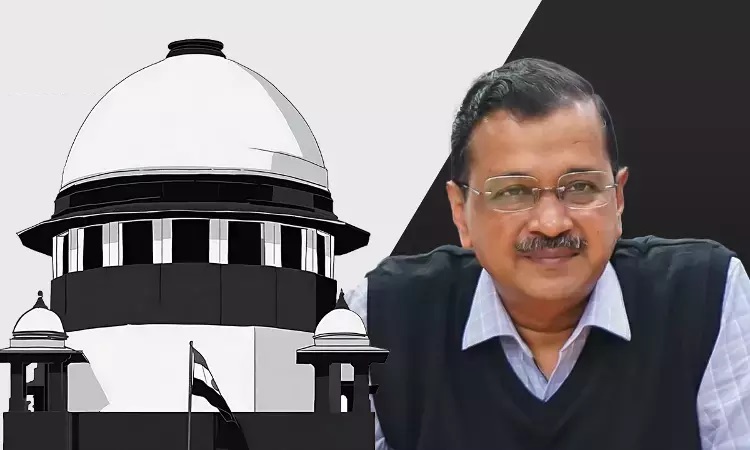
Interim bail to Arvind Kejriwal | Supreme Court Upholds Fundamental Rights
In a significant ruling, the Supreme Court has reaffirmed the fundamental rights of political leaders, declaring that bail conditions restricting their political activities and public rallies constitute a breach of their constitutional liberties. The landmark judgment came in the case of Arvind Kejriwal, the prominent Indian politician and leader of the Aam Aadmi Party (AAP), whose interim bail was under scrutiny by the Directorate of Enforcement (ED).
The ED had argued against granting interim bail to Kejriwal, citing Section 62(5) of the Representation of the People Act, 1951, which empowers authorities to curtail the right to vote under certain circumstances. However, the Supreme Court, in a bench comprising Justices Sanjiv Khanna and Dipankar Datta, rejected this contention, highlighting that the same judgments quoted by the ED supported Kejriwal's position.
The case centred on whether bail conditions imposed on Kejriwal, which prohibited him from engaging in political activities and participating in public rallies, were constitutionally valid. The Supreme Court meticulously examined the legal precedents and fundamental rights enshrined in the Constitution of India to arrive at its verdict.
In its judgment, the Court emphasized the importance of upholding the right to freedom of speech and expression, as guaranteed under Article 19(1)(a) of the Constitution. The bench underscored that political activities and public rallies are integral aspects of democratic participation and play a crucial role in the exercise of citizens' political rights.
Moreover, the Court invoked principles of equality and non-discrimination, highlighting that singling out political leaders for restrictive bail conditions would amount to unfair treatment and undermine the democratic fabric of the nation. The bench stressed the need to balance the interests of law enforcement with the protection of individual liberties, cautioning against overly broad restrictions that could encroach upon fundamental rights.
By striking down the bail conditions imposed on Kejriwal, the Supreme Court has set a significant precedent, reaffirming the rights of political leaders to engage in political activities without undue interference or restraint. The ruling underscores the judiciary's commitment to upholding constitutional values and safeguarding democratic principles in the face of legal challenges.
In response to the verdict, Arvind Kejriwal expressed gratitude to the judiciary for upholding his rights and vowed to continue his political activities in service of the people. The ruling is expected to have far-reaching implications for future cases involving the rights of political leaders and the scope of permissible restrictions on their activities.
As the nation grapples with complex legal and political issues, the Supreme Court's decision in the Arvind Kejriwal case serves as a beacon of hope, reaffirming the foundational principles of democracy and individual freedoms upon which the Indian Constitution stands.
-- Thank You AN News --
 Anjali
1 Comments
Anjali 01 Jan 2045
Good and neat writing...
Leave a comment
Follow Us
Advertisement

Trending News



Newsletter
For Latest News Subscribe our Newletter