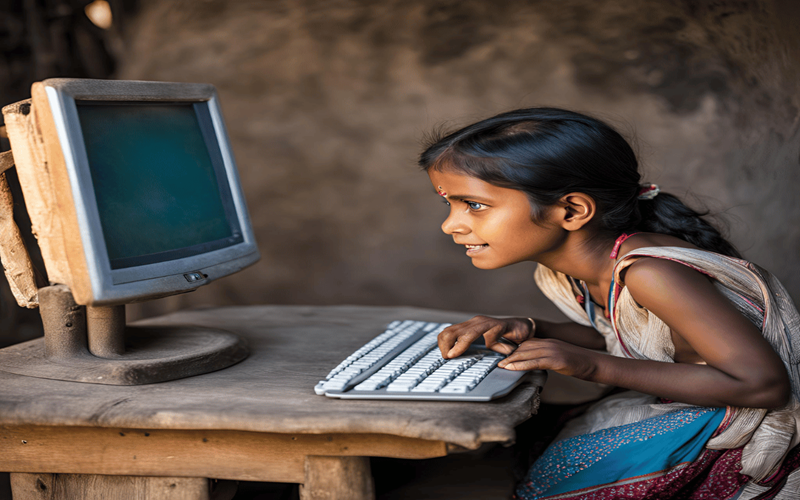
Educational Challenges Persist in Rural India: Addressing Inequality and Access
Rural India continues to grapple with a myriad of educational challenges, highlighting deep-rooted disparities in access to quality education and opportunities for millions of children in remote villages and hamlets across the country. From inadequate infrastructure to a shortage of qualified teachers, the education landscape in rural areas presents multifaceted obstacles that hinder the development and future prospects of students.
One of the most pervasive issues facing rural schools is the lack of basic infrastructure and facilities. Many schools in rural areas lack proper classrooms, furniture, sanitation facilities, and clean drinking water, creating an inhospitable learning environment that undermines students' ability to concentrate and learn effectively. Moreover, the absence of electricity and internet connectivity further limits educational opportunities, hindering access to digital resources and online learning platforms.
The shortage of qualified teachers is another critical challenge confronting rural schools. Many rural areas struggle to attract and retain trained educators, leading to high teacher-student ratios and compromised quality of instruction. In some cases, schools are forced to rely on untrained or underqualified teachers, exacerbating learning gaps and hindering students' academic progress. Moreover, teacher absenteeism and irregularities in teacher deployment further compound the problem, leaving many rural schools understaffed and ill-equipped to meet students' educational needs.
Beyond infrastructure and staffing issues, rural schools also grapple with curriculum limitations that fail to address the unique needs and realities of rural students. The curriculum often lacks relevance to rural contexts, focusing primarily on rote memorization and theoretical knowledge rather than practical skills and experiential learning. As a result, many students struggle to relate to their studies and see little connection between classroom learning and their daily lives.
Access to secondary and higher education poses additional challenges for rural students, with limited availability of higher educational institutions and vocational training centers in rural areas. Many students must travel long distances or relocate to urban centers to pursue higher education, placing an additional burden on already marginalized communities and exacerbating inequalities in educational attainment.
Despite these challenges, there are glimmers of hope on the horizon as government initiatives and grassroots efforts strive to improve educational outcomes in rural India. Programs such as the Sarva Shiksha Abhiyan (SSA) and the Rashtriya Madhyamik Shiksha Abhiyan (RMSA) aim to universalize elementary and secondary education and improve infrastructure, teacher quality, and access to education in rural areas. Additionally, non-profit organizations, community groups, and social entrepreneurs are working tirelessly to fill the gaps in rural education through innovative approaches such as mobile schools, community learning centers, and digital literacy programs.
As India seeks to build a more inclusive and equitable education system, addressing the educational challenges in rural areas must be a top priority. Investments in infrastructure, teacher training, curriculum reform, and access to higher education can help bridge the gap between rural and urban schools and unlock the potential of millions of rural children. By prioritizing education as a fundamental right and investing in the future of rural India, the country can pave the way for a brighter and more prosperous future for all its citizens.
-- Thank You AN News --
 Anjali
1 Comments
Anjali 01 Jan 2045
Good and neat writing...
Leave a comment
Follow Us
Advertisement

Trending News



Newsletter
For Latest News Subscribe our Newletter